Switching self storage software: a migration guide
Switching self storage software is a bounded project, not a leap: the structured records — units, customers, agreements — migrate cleanly, while outstanding balances, payment mandates and in-flight collections need a plan. Export everything, map the fields, run the old and new systems in parallel for one billing cycle, and reconcile the first live run to the penny. Done at a quiet point, the switch costs less than staying on a platform you have outgrown.
- Operators usually switch because growth outpaces a starter tool — features or the API gated in higher tiers, weak reporting, per-site fees or rail markups, or no real online checkout.
- The structured records migrate cleanly (units, customers, agreements); the parts that need a plan are outstanding balances, payment-mandate portability, in-flight collections and historical invoices.
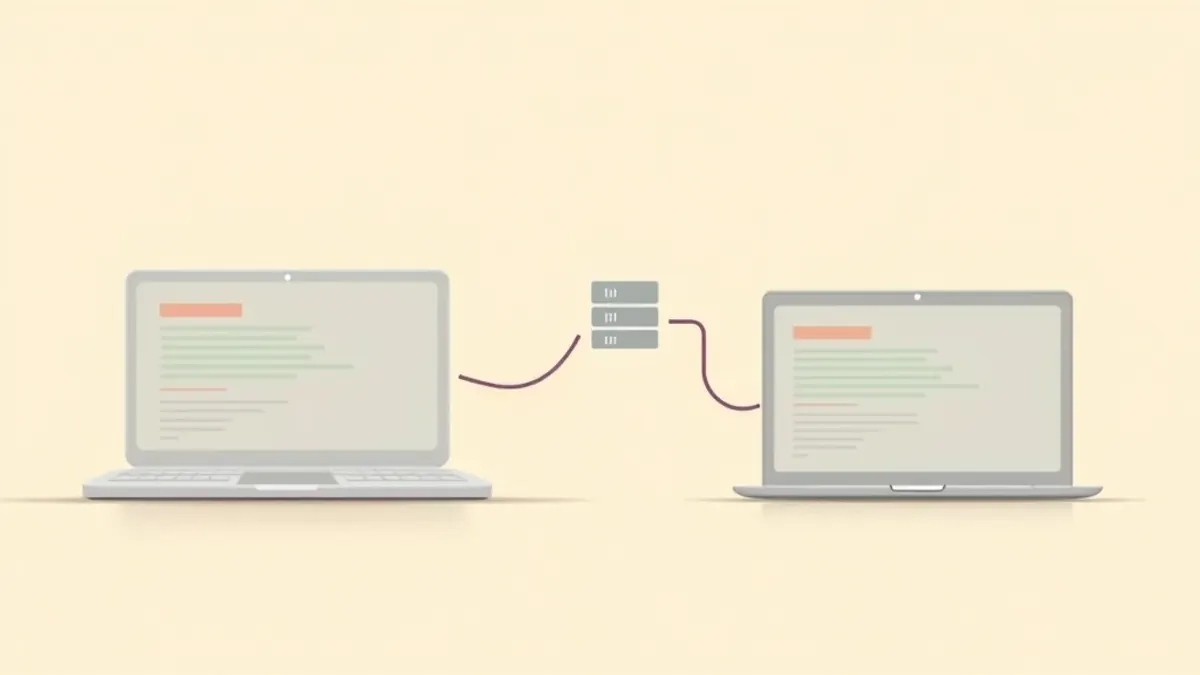
- De-risk it with a phased checklist: export to clean CSV, map fields, import to a sandbox, run in parallel for one billing cycle, then reconcile the first live run.
- Time the move for a quiet season and a billing-cycle boundary — never mid-price-increase or during a fill-up.
- Ask any new vendor the two-way question: will they migrate you in, and what is the export format the day you leave — data portability both ways is the real protection against lock-in.
Most operators stay on the wrong software far longer than they should. Not because it is good — because switching feels risky, and one fear looms over all the others: what happens to the data. Years of customers, agreements, balances and payment mandates live inside the current system, and moving them sounds like the kind of project that goes wrong on a billing run and costs you a weekend of apologies.
It is a real risk, and it is a manageable one. A software migration is a bounded project with a checklist, not a leap of faith — and done at the right time, in the right order, it is far less painful than the slow, recurring cost of running your business on a tool it has outgrown. This guide covers why operators move, exactly what migrates cleanly and what needs care, the phased checklist that de-risks the switch, when to do it, the honest maths of staying versus moving, and the questions that separate a safe new platform from a trap.
Why operators switch
Almost nobody changes storage software over a single fault. The move is usually pulled by growth rather than pushed by a breakdown — the platform that was right for one site and a spreadsheet's worth of customers stops fitting somewhere around the third location. The reasons operators give tend to be:
- Outgrowing a starter tool. A cheap or basic platform that comfortably handled one site starts to creak when you add locations, staff and volume.
- Features and the API behind a paywall. The capability you now need — a public API to connect your own tools, automated collections, real multi-site reporting — turns out to sit two tiers up, and the upgrade costs more than the whole platform did.
- Reporting that can't answer the question. You want occupancy and economic occupancy by size and by site, rate-change history, collection rates — and the system hands you a raw export you massage by hand every month.
- Price, and its shape. A per-site fee that punishes every new location; a margin added to every card and Direct Debit collection on top of the processor's own cut; an annual bill that climbs faster than the portfolio.
- Wanting a real online checkout. Around 94% of UK stores now offer online booking (SSA UK / Cushman & Wakefield 2026), so a platform that still can't take a full move-in online — choose a unit, pay, e-sign the licence agreement, get a gate code at 10pm on a Sunday — is a competitive liability, not a quirk.
If two or three of those are true, you are not being impatient. You are paying, every month, for a platform that has started working against you.
The real fear: what happens to your data
Here is the honest answer: most of your data moves cleanly, some of it needs care, and one part — payment mandates — needs a plan. Knowing which is which is what turns the fear into a task list.
The structured records move cleanly: units, sites, unit types and prices; customer records; the agreement records and their terms. What needs care is the rest. The paper, because a signed agreement is a document, not just a row. Your arrears position, because balances and payment history rarely transfer as neatly as vendors imply — agree with the new platform exactly how outstanding balances come across (or are settled at cutover), and keep the old system available as the historical record your collections paper trail may one day depend on. And, above all, the payment mandates. A Direct Debit instruction is held against a specific merchant account, and moving it to a new provider is a managed process, not a CSV import.
The mandate row is the one to respect. If every customer has to set up a fresh Direct Debit, a meaningful share simply won't, and you have converted a migration into a collections problem. The good news: mandates can usually move without re-authorisation. If you collect into your own payment accounts, switching software doesn't touch them at all. And where mandates sit with a provider you're leaving, the Bacs scheme's bulk change process can transfer them to a new provider — customers are notified in writing, never asked to sign again — though it needs the outgoing provider's cooperation, a formally signed transfer deed, and several weeks of lead time, so it belongs at the start of your switching plan, not the end. Card-on-file details follow a separate, PCI-controlled transfer path between payment processors. All of which is a question to put to any new platform before you commit — this guide comes back to it below.
| Data | Moves cleanly? | What to watch |
|---|---|---|
| Units, sites, unit types, prices | Yes — a structured export | Map size and price fields to the new model first |
| Customer records | Yes — names, contacts, balances | De-duplicate first; a messy database imports its mess |
| Licence agreements | Record and terms yes; signed document needs a decision | Migrate historical PDFs, or re-paper on current terms at renewal |
| Arrears & payment history | Needs a plan — agree it before you sign | Agree how outstanding balances come across or settle at cutover; keep the old system as the historical record any later lien process may need |
| Direct Debit & card mandates | The fiddly part — tied to a merchant account | Plan a managed transfer with your provider; never mass re-authorise |
| In-flight collections | Handle with care | Don't cut over mid-collection — let pending DDs settle first |
| Historical invoices | Usually as records or PDFs | Keep read-only access to the old system for six-year retention |
The migration checklist
Treat the move as a sequence, not a switch you flip. Seven phases keep it safe.
Two phases carry the risk and deserve the attention: the parallel run and the first live billing run. A parallel cycle — billing on the new system while the old one is still the source of truth — is the difference between finding a mapping error in a spreadsheet and finding it in a customer's inbox. And the first live run is where a wrong VAT treatment or a missed advance notice becomes a real complaint, so reconcile it line by line before you trust the automation to run unwatched.
1 · Export Pull every dataset from the current platform as clean CSV, and test the export before you rely on it.
2 · Map fields Match each field to the new system — sizes, price types, VAT treatment, agreement status. Clean and de-duplicate as you go.
3 · Import to a sandbox Load into a test environment first. Check record counts, total balances and a sample of agreements against the source.
4 · Run in parallel Keep the old system live for one full billing cycle. Bill on the new one, reconcile against the old, fix every mismatch.
5 · Reconcile first live run Check the first real invoice run to the penny — amounts, VAT, Direct Debit advance notices, arrears.
6 · Re-paper if needed Decide whether existing customers move onto current licence terms, usually at renewal.
7 · Cut over & archive Move new sign-ups across, stop billing on the old system, keep it read-only for your retention period.
Timing: when to move
When you switch matters almost as much as how. The principles:
- Move in a quiet season. Storage has rhythms — a post-summer lull, a slow patch after the new year. Migrate when move-in volume is low and your attention is free, not during peak.
- Never mid-price-increase. Cutting over while a rate change is in flight muddles which system issued which notice, and which fee a customer actually agreed to. Finish the increase, then move.
- Not during a fill-up. If you are pushing hard to fill a new site, keep operations boring and add the migration afterwards.
- Align to a billing boundary. Cut over at the start of a billing cycle, so the first run on the new system is a clean whole period rather than a tangle of part-month pro-rata charges.
- Budget the parallel window. Whatever the season, plan for one full billing cycle of overlap. A migration with no parallel run is the one that goes wrong in public.
The maths of staying versus switching
The reason operators tolerate the wrong platform is that the cost of switching is visible and immediate — a few weeks of careful work — while the cost of staying is invisible and spread thinly across every month. Line the two up honestly and the sums usually favour the move.
The switch is a one-off cost: the export, the mapping, a parallel cycle, a carefully watched first run. Real, but bounded, and over in weeks.
Staying is a recurring tax you may have stopped noticing:
- Features you pay extra to unlock, or simply do without — the API, the reporting, the automated collections sitting in a tier above yours.
- A per-site fee on every location you open, so growth itself raises your unit cost.
- A markup on every card and Direct Debit collection, skimming a slice of revenue you never see itemised.
- The hours lost each month to reporting the system can't do, and the exceptions its automation can't handle.
Add the recurring numbers up over a year and set them against the one-off cost of moving. For a growing portfolio, the annual tax of staying often exceeds the whole cost of the switch — which reframes migration from an expense into a payback. The transparent way to run that comparison is on published pricing; our UK self storage software cost comparison lays the numbers out side by side so you can do the sum for your own portfolio.
Questions that de-risk a switch
Before you commit to any platform — including the one you are on now, if you are minded to stay — put these to the vendor. The answers separate a safe move from a costly one:
- Do you migrate our data for us, or hand us an import tool and wish us luck? A platform that imports your units, customers and live agreements as part of onboarding — and previews every import before it is written — removes most of the risk you are worried about. Ask specifically how outstanding balances are handled at cutover; that is where the answers get vague.
- Is there a sandbox? You want to load your real data into a test environment and see it work before a single live customer is affected.
- How do our Direct Debit mandates transfer? The right answer depends on whose merchant account holds them. If it is your own account, they stay put untouched. If it is the platform's, the right answer describes the Bacs bulk change process — a managed, notify-only transfer arranged with the payment providers — plus honest lead time, not "your customers will need to re-register".
- What does it cost to import — and to export? Charging you to get your own data in, or out, tells you how the rest of the relationship will go.
- And the most revealing question of all: what is the export format the day we leave you? A platform confident in its product makes leaving easy, because it does not need to trap you. Data portability that works in both directions is the strongest protection against having to make this same painful choice again in three years — so weigh a platform's exit as carefully as its entrance.
How StoreBay handles a switch
In the spirit of answering our own questions above, here is how StoreBay approaches a migration.
Importing your existing data — units, customers, live agreements — is part of guided onboarding, loaded into a sandbox first so you can check it before anything goes live. Because operators collect into their own Stripe and GoCardless accounts, an operator already using those rails keeps their existing Direct Debit mandates untouched; where mandates are held by a provider you're leaving, we plan the Bacs bulk change with you at the start of onboarding, and where a customer genuinely does need a new Direct Debit, they get a secure authorisation link by email and the portal handles the rest — no paper forms. And the commercial shape is built not to punish the growth that made you switch in the first place — sites are unlimited and free, payment processing is passed through at the rail's own cost with no StoreBay markup, and the API, collections and full multi-site reporting are included in the standard plan rather than gated in a higher tier: £63/month +VAT including your first 50 units, then £0.48 per unit/month +VAT above (the pricing is published in full).
The part that should matter most, though, is the answer to that last question. Your data is always exportable from StoreBay — there is no lock-in. We would rather earn the next year than trap you into it. If you are weighing a move, the self storage software overview is the place to start, and our best self storage software UK comparison sets out the wider landscape honestly.
A project, not a leap
The fear that keeps operators on the wrong platform — that migration is a cliff edge — is the wrong picture. It is a project: export, map, test, run in parallel, reconcile, cut over. Scope it, pick a quiet month, insist on a parallel cycle, and the risk shrinks to something you manage on a checklist. The larger risk is the one that feels safe: another year, and another after that, paying a growing tax to run your business on software it has already outgrown. Switching is a bounded cost. Staying put is a recurring one.
Migrating is also a natural moment to fix things you have been living with — the pricing you inherited (self storage pricing strategy) and the site that receives your bookings (self storage website design).
Two things are worth reading before you commit to a date. Payment mandates are the hard part of any migration — Bacs Direct Debit explains why a mandate cannot simply be copied between providers. And if you are still shortlisting rather than switching, self storage software sets out what to ask any vendor, while the glossary covers the terms that come up in demos.
FAQs
Is it hard to switch self storage software?
Less than most operators fear. It is a bounded project: export your data as clean CSV, map the fields, import into a test environment, run the old and new systems in parallel for one billing cycle, then reconcile the first live invoice run before you rely on it. The genuinely fiddly part is transferring Direct Debit mandates — plan that with your payment provider.
What data can you migrate between storage platforms?
Units, sites, unit types and prices, customer records, and licence agreement records and terms migrate cleanly as structured exports. What needs care is your arrears position (agree exactly how outstanding balances come across, or are settled at cutover), the signed agreement documents, historical invoices, in-flight collections, and payment mandates — mandates are held against a specific merchant account and transfer as a managed process rather than a simple import.
When is the best time to switch storage software?
Pick a quiet season — a post-summer lull or the slow patch after new year — when move-in volume is low. Cut over at the start of a billing cycle so the first run is a clean whole period, and never migrate mid-price-increase or during a new-site fill-up. Always budget one full billing cycle of parallel running before you depend on the new system.
How do I avoid being locked into storage software?
Ask before you commit: what is the export format the day you leave, and does it cost anything to get your data out? A platform confident in its product makes leaving easy. Data portability that works in both directions — easy to import into, easy to export from — is the strongest protection against having to repeat this choice in a few years.